How to Make Money on X: Turn Attention Into Paid Requests
X attention disappears fast. Use your profile, pinned post, replies, and proof posts to route serious followers into paid, scoped Moltgate offers before the signal cools.
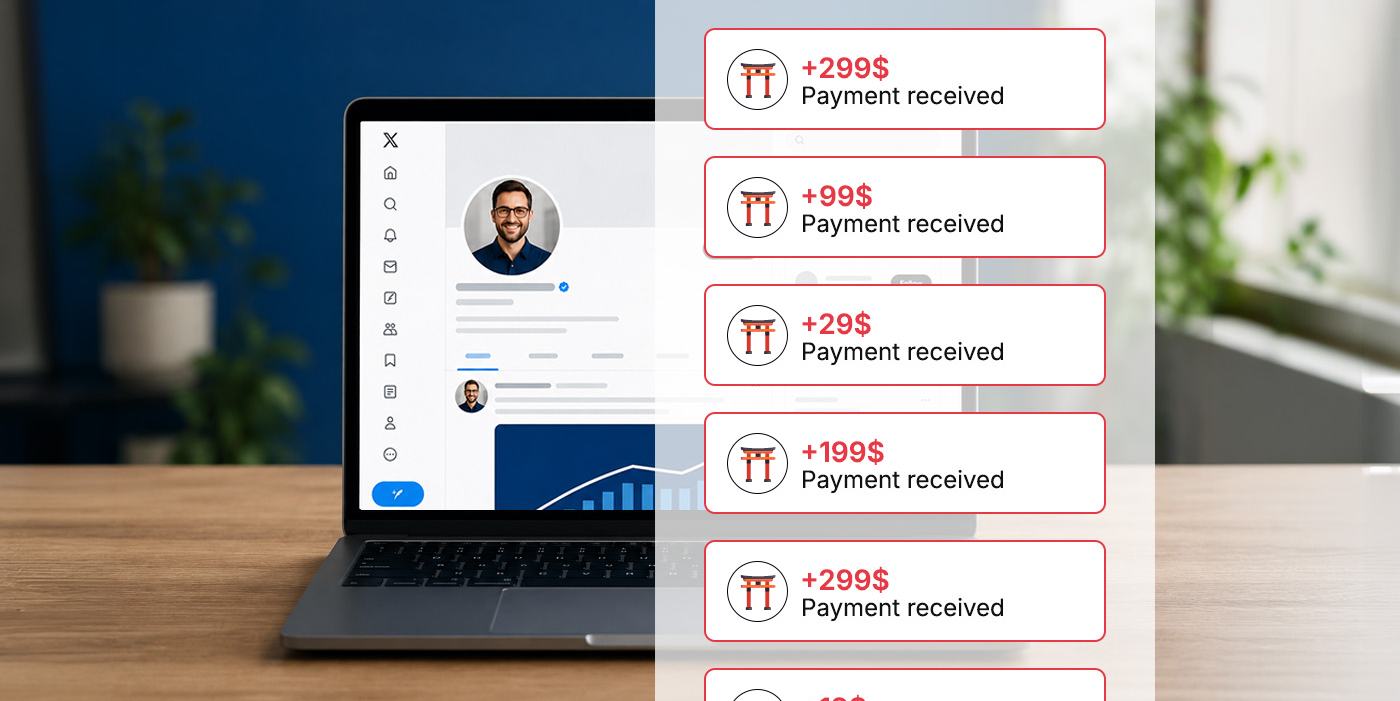
X is not LinkedIn with shorter sentences.
It is a different market.
LinkedIn rewards professional positioning. X rewards velocity, sharpness, taste, argument, timing, and proof under pressure.
That makes it powerful.
It also makes it dangerous.
On X, attention can arrive fast and disappear faster. A strong post can bring profile visits, replies, follows, DMs, and screenshots within hours. Then the moment decays. The timeline moves on. The buyer who felt the problem at 10:14 is thinking about something else by 11:02.
Most people waste that moment.
They post a sharp idea, get engagement, and send serious readers into vague paths:
- “DM me.”
- “Link in bio.”
- “Follow for more.”
- “Building in public.”
- “Join the waitlist.”
- “Book a call.”
Weak.
The right X strategy is not to collect attention indefinitely.
The right strategy is to route sharp attention into paid, scoped requests before it cools.
That is where Moltgate belongs.
- Publish the idea.
- Attach the offer.
- Let serious readers pay.
- Fulfill manually first.
- Watch what repeats.
- Automate only after paid requests prove the pattern.
Sell the task first.
Automate what repeats.
Use X as a distribution test
Start in the free generator with the expertise, workflow, or agent idea your posts demonstrate. Select X as the channel and enter an honest audience estimate. Moltgate creates three sellable drafts; publish the strongest one on Free, or compare up to three live offers on Pro only when your traffic can support a meaningful test.
Share the direct link in a relevant post, reply, thread, or profile placement. The post-publish promotion step provides an editable X draft, while source tags let Analytics separate X traffic from LinkedIn, the Directory, and other channels. An optional offer image can help the link travel, but a specific buyer outcome matters more than artwork.
The broken default: virality without a buying path
X is full of people who can attract attention but cannot capture demand.
- They write useful threads.
- They post strong takes.
- They share build notes.
- They do product teardowns.
- They comment under larger accounts.
- They show screenshots.
- They publish frameworks.
- They get followed by the right people.
Then nothing operational happens.
A few DMs arrive.
- Some are interesting.
- Some are vague.
- Some are free work disguised as curiosity.
- Some are people asking for advice they should pay for.
- Some are not buyers at all.
The creator starts answering.
- A thread becomes a DM.
- A DM becomes unpaid consulting.
- Unpaid consulting becomes resentment.
- Resentment becomes silence.
The issue is not that X is bad for business.
The issue is that attention was never given a paid route.
X is a signal machine, but not all signal is equal
Likes are weak signal.
Reposts are stronger.
Replies are stronger if they contain a real problem.
Profile visits are stronger if the profile has a clear next step.
DMs are stronger if the sender knows what they want.
Paid requests are strongest.
A paid request says:
This problem matters enough to commit money, context, and intent.
That does not make every buyer good.
It makes the signal more serious than applause.
On X, this distinction matters because the platform creates cheap reaction at scale.
People like posts they do not act on.
They repost ideas they will never implement.
They reply with “this” and forget ten minutes later.
Do not build around applause.
Build around paid requests.
Your X profile should sell one next task
An X profile has limited space.
Good.
Constraint forces clarity.
Your bio, banner, pinned post, and website link should point toward one commercial question:
What can a serious follower buy from me now?
Not your whole business.
One next task.
- $29 Quick expert triage
- $49 Landing page teardown
- $49 X profile teardown
- $99 AI workflow review
- $99 Paid discovery brief
- $199 Offer teardown
- $299 Agent workflow teardown
- $299 Async strategy memo
The offer should match why people follow you.
If people follow you for AI agents, sell an agent workflow review.
If people follow you for startup strategy, sell a decision review.
If people follow you for marketing, sell an offer teardown.
If people follow you for engineering, sell a codebase, architecture, or debugging review.
If people follow you for open source, sell commercial support review.
If people follow you for product taste, sell a product or landing page teardown.
Do not make people infer the next step.
X moves too fast for inference.
Build the profile as a paid request path
Your X profile should not read like a résumé.
It should function like a routing layer.
Bio
Your bio should answer three questions:
- Who do you help?
- What problem do you help with?
- What paid request can someone send?
Weak:
Founder. AI. Startups. Writing about agents and markets.
Better:
I help builders turn AI workflow ideas into paid, scoped tasks. Send a $99 workflow review below.
Better still:
Before you automate the wrong AI workflow, send a paid review. I’ll find the bottleneck, risk, and next step.
The bio does not need to explain everything.
It needs to make the paid path legible.
Website link
Use the website link for your Moltgate offer, offer directory, or a focused page that routes to your best offer.
Do not waste it on a generic homepage unless that homepage immediately explains the offer.
Best use:
- direct Moltgate offer
- page with 2–3 paid offers
- productized service page
- paid request directory
- “work with me” page where the first action is a paid request
Bad use:
- vague personal website
- old portfolio
- newsletter with no offer
- link hub with twelve unrelated links
- calendar as the first step for every buyer
A calendar creates meetings.
A Moltgate offer creates paid, scoped demand.
Different thing.
Banner
The banner should compress the offer.
Use it to make the paid next step obvious.
Examples:
- “Send a paid AI workflow review.”
- “Get your offer torn down.”
- “Paid strategy memos for serious decisions.”
- “Commercial support review for OSS teams.”
- “Sell the task first. Automate what repeats.”
The banner is not a mood board.
It is a sign.
Pinned post
The pinned post should be your clearest proof-plus-offer post.
Not your most viral joke.
Not your vague founder story.
Not your favorite thread from six months ago.
It should do three things:
- Show the problem you understand.
- Demonstrate your judgment.
- Send serious readers to a paid offer.
A good pinned post is a mini landing page for your paid request path.
X content should create buying tension
Do not post generic “value.”
Post in a way that makes the reader feel a specific problem.
A strong X post should create one of these reactions:
- I am making that mistake.
- I need this reviewed.
- This applies to my workflow.
- This person sees the thing I could not articulate.
- I should send my situation before I waste more time.
That is buying tension.
Not hype.
Not generic agreement.
A Moltgate offer gives that tension somewhere to go.
The content-to-offer match
Every offer needs content that makes it feel inevitable.
If your offer is AI Workflow Review
Post about:
- agents failing because task briefs are vague
- automation before paid signal
- hidden runtime costs
- tool-call waste
- workflow handoff problems
- prompts that lack acceptance criteria
- human review boundaries
CTA:
“Want your workflow reviewed before you automate it? Send a paid AI Workflow Review.”
If your offer is Offer Teardown
Post about:
- vague service pages
- offers that get likes but no buyers
- price points that do not match scope
- bad CTAs
- unclear deliverables
- why “DM me” leaks demand
CTA:
“Want your offer torn down? Send a paid offer review.”
If your offer is X Profile Teardown
Post about:
- bios that do not create buying intent
- pinned posts that waste trust
- banners with no commercial job
- founders attracting followers but not buyers
- experts sending demand into DMs
CTA:
“Want your X profile reviewed as a paid request path? Send a profile teardown.”
If your offer is Paid Discovery Brief
Post about:
- free discovery calls
- unpaid strategy leakage
- poor qualification
- prospects who cannot define the problem
- why serious buyers should provide context first
CTA:
“Want me to review fit before a call? Send a paid discovery brief.”
If your offer is OSS Support Review
Post about:
- commercial users hiding inside community issues
- maintainer burnout
- production-impact bugs
- support boundaries
- open code versus free support
CTA:
“Need priority maintainer review? Use the paid support offer.”
The post creates the problem.
The offer captures the request.
That is the loop.
X rewards sharp formats
Some formats fit X better than others.
Use the platform’s native energy.
1. The one-line rule
A compressed belief.
Example:
Do not automate work nobody has paid for.
CTA follow-up:
“If you want your workflow checked before you build the automation, I have a paid review offer in my profile.”
2. The teardown
Show a bad version and a better version.
Example:
Bad X bio: “Building AI tools for the future.”
Better: “I help SaaS teams find one workflow worth automating. Paid reviews below.”
CTA:
“Want yours torn down? Send a paid profile review.”
3. The mini-thread
Use 5–9 posts to explain a mechanism.
Example:
Why AI agents fail before the model runs.
End with:
“Send your workflow as a paid request if you want this applied to your system.”
4. The screenshot proof
Show work.
- A workflow map.
- An anonymized teardown.
- A before/after offer.
- A decision matrix.
- A support intake rewrite.
- A profile before/after.
CTA:
“Want your version reviewed? Paid request link in profile.”
5. The field note
Use repeated paid requests as pattern input.
Example:
Three paid workflow reviews this week had the same problem: the agent was fine. The task brief was garbage.
CTA:
“If that sounds like your workflow, send a paid review.”
6. The reply-as-funnel
Reply to your own post with the offer link.
Main post delivers the idea.
Reply gives the buying path.
This keeps the main post clean while still giving serious readers a route.
Do not attach the offer to every post
This is where people become unbearable.
Not every post needs a pitch.
Use three modes.
Proof posts
Show thinking, taste, mechanism, teardown, or work.
Soft CTA or offer link in reply.
Trust posts
Explain your standards, operating philosophy, process, or worldview.
No CTA needed.
Offer posts
Directly sell the paid offer.
Clear CTA.
The ratio matters.
If every post sells, people stop reading.
If no post sells, buyers do not know how to act.
A good X account alternates between proof, trust, and offer.
The best X offer post structure
Use this:
- Name the pain.
- Say why the default fails.
- Show the better mechanism.
- Introduce the paid offer.
- Say the price.
- Say exactly what the buyer gets.
- Tell them what to submit.
Example:
Most AI workflow failures are not model failures.
They are task definition failures.
The agent gets vague goals, unclear tools, no acceptance criteria, and then everyone blames the model.
I review this before teams automate more.
$99 AI Workflow Review:
Send your goal, current process, tools, inputs, expected output, and where it breaks.
You get the bottleneck, risk, and next step.
That is a good offer post.
It does not beg.
It gives a serious reader a serious next step.
Use the price ladder as a testing system
Moltgate prices are not just monetization.
They are tests.
$9 / $19 / $29: small intent tests
Use these when your audience is not yet proven as buyers.
Good X offers:
- $19 Bio rewrite
- $29 Quick expert triage
- $29 Prompt/task rewrite
- $29 Offer wording check
- $29 Small workflow question
These prices test whether people will pay for your judgment at all.
$49 / $99: serious request layer
Use these when the request needs real review.
Good offers:
- $49 X profile teardown
- $49 Landing page teardown
- $99 AI workflow review
- $99 Paid discovery brief
- $99 Proposal red-flag review
- $99 Decision memo critique
This is the strongest layer for many X accounts.
It filters casual people without requiring deep trust.
$199 / $299: premium async work
Use these when the problem is high-value and your proof is visible.
Good offers:
- $199 Deep offer teardown
- $199 Product roadmap review
- $299 Async strategy memo
- $299 Agent workflow teardown
- $299 Implementation priority plan
Do not lead with a $299 offer if your profile does not prove you can deliver it.
Trust comes before premium pricing.
The X monetization test
Run this for 30 days.
Week 1: Choose one offer
Pick one audience and one paid offer.
Not five.
One.
Examples:
- AI operators → $99 AI Workflow Review
- founders → $99 Decision Review
- consultants → $99 Paid Discovery Brief
- creators → $49 Profile Teardown
- OSS maintainers → $99 Priority Maintainer Review
- marketers → $49 Offer Teardown
Write the offer in Moltgate with:
- price
- scope
- deliverable
- expected timing
- required context
- clear boundaries
Put the link in your profile.
Pin a post about it.
Week 2: Publish proof
Post 5–10 pieces of content around the problem.
Use different formats:
- one-liner
- mini-thread
- teardown
- before/after
- screenshot
- field note
- contrarian rule
- decision framework
Do not change the offer yet.
Test content first.
Week 3: Test angles
Same offer.
Different angles.
Example: $99 AI Workflow Review
Angles:
- wasted tokens
- bad task briefs
- automation before signal
- agent reliability
- human review boundaries
- operational risk
- customer trust
The market may respond to one angle much more than the others.
That is not random.
That is positioning data.
Week 4: Decide
If nobody clicks, the content or CTA is weak.
If people click but do not pay, the offer page, price, proof, or promise is weak.
If people pay but requests are bad, the intake fields are weak.
If people pay and the request repeats, double down.
That means:
- raise price
- publish more on the converting angle
- add a premium version
- create adjacent offers
- turn fulfillment into a template
- route through webhook or API
- use agents only after the pattern is clear
Do not automate before signal.
X will tempt you to move fast.
Move fast after the market speaks.
Track what matters
Track:
- post topic
- post format
- hook
- CTA
- offer linked
- profile visits
- link clicks
- paid requests
- price point
- buyer type
- request quality
- fulfillment time
- repeat patterns
- follow-up opportunities
- content created from the request
Do not worship impressions.
A post with 4,000 views and two paid requests is better than a post with 200,000 views and zero buyers.
X will reward spectacle.
Your business needs conversion.
Keep the distinction clean.
Replies are part of the funnel
On X, replies matter more than on LinkedIn.
Replies are where buyers test you.
Someone says:
“This is exactly our problem.”
Do not give away the whole answer.
Reply:
“Then the first step is a scoped review. I’d need the current workflow, tools, inputs, outputs, and where it breaks. Paid review link is in my profile.”
Someone asks:
“Can you look at mine?”
Reply:
“Yes. Send it through the paid teardown offer so I have the context and can give you a proper review.”
Someone asks for free detail:
“Can you explain what you’d change?”
Give a useful principle, not the full private application.
Public principle is content.
Private application is paid.
That boundary is the business.
Quote posts can sell without feeling like ads
A quote post is a good way to attach your expertise to a live conversation.
Use it carefully.
Bad quote post:
“Great point. I help with this. DM me.”
Better:
“This is exactly where most AI workflow projects fail: not the model, the request shape. If the task is vague before runtime, automation only makes the mess faster.”
Then reply with:
“I review these as paid requests. Link in profile.”
The quote post should add analysis, not just steal attention.
If your quote post creates a new insight, it can route demand.
If it only attaches your offer to someone else’s reach, it looks cheap.
Images and screenshots are proof surfaces
X is dense.
A good visual can stop the scroll.
Use visuals that compress your expertise:
- before/after profile
- offer teardown
- workflow diagram
- request intake checklist
- “free DM vs paid request” comparison
- task brief template
- agent failure map
- support routing matrix
- anonymized paid request pattern
Avoid generic AI art unless the visual itself makes the idea clearer.
A visual should do work.
It should make someone understand the problem faster.
If it only decorates the post, remove it.
Voice: sharp, useful, recognizably yours
X punishes blandness.
Do not write like a committee.
Do not imitate the same ten founder accounts.
Do not over-polish every sentence until it loses pulse.
Your voice should match the paid work you sell.
If you sell judgment, write with judgment.
If you sell technical review, show mechanism.
If you sell taste, be specific.
If you sell AI workflow help, name the failure point.
If you sell strategy, make real claims.
The content should pre-qualify the buyer.
A good follower should think:
This person would see the thing I am missing.
That is the beginning of a paid request.
Do not build around DMs
DMs are useful.
But they should not be the primary intake system.
DMs are bad at:
- scope
- pricing
- deliverables
- context
- status
- routing
- payment
- expectations
- automation
Moltgate is built for those things.
The right DM response is often:
“Send it as a paid request here.”
That is not cold.
It is professional.
If the request needs real work, it deserves structure.
What to do when an offer works
When an offer starts selling, do not immediately build a giant product.
Tighten.
Tighten the offer
Make the promise clearer.
Add examples of what belongs.
Remove ambiguous language.
State what is not included.
Tighten the content
Publish more around the angle that converted.
If “bad task briefs” sells more AI workflow reviews than “wasted tokens,” follow the signal.
Tighten the intake
Ask for better context.
For profile teardown:
- profile URL
- target audience
- current offer
- desired inbound
- best post
- what is not working
For workflow review:
- goal
- current process
- tools
- input
- output
- failure point
- constraints
- success criteria
Better inputs reduce fulfillment cost.
Tighten the price
If a $29 offer sells and takes real judgment, test $49.
If a $99 offer repeats and the value is high, test $199.
If a $299 offer sells, create a stronger premium process.
Price should rise with proof, demand, and scope.
Not ego.
Tighten the workflow
Automate only what repeats.
Use agents to summarize context, extract constraints, draft first-pass reviews, prepare teardowns, or classify requests.
Use webhooks or API polling when the paid request pattern is stable.
Keep human review where trust matters.
What to do when an offer fails
A failed offer is not humiliation.
It is information.
Diagnose the failure.
No impressions:
The topic or hook is weak.
Impressions but no clicks:
The CTA or offer match is weak.
Clicks but no purchases:
The offer page, price, trust, or deliverable is weak.
Purchases but bad requests:
The intake fields are weak.
Good requests but bad margin:
The price is too low or the scope is too broad.
Fix the weakest part.
Then test again.
Do not confuse a failed angle with a failed business.
X is volatile.
Use it as a testing ground, not an emotional scoreboard.
The X content engine for paid requests
The system is simple.
- Publish a sharp post around one specific pain.
- Route serious readers to one Moltgate offer.
- Collect paid, scoped requests.
- Fulfill manually first.
- Extract anonymous patterns.
- Turn those patterns into new posts.
- Improve the offer.
- Automate what repeats.
That is the loop.
Not “post every day and hope.”
Not “go viral.”
Not “become a thought leader.”
A paid request loop.
Example: AI operator
Post:
“Your AI agent is not failing because the model is weak. It is failing because the task brief has no acceptance criteria.”
Offer:
$99 AI Workflow Review
CTA:
“Send your current workflow as a paid request. I’ll identify the bottleneck, missing context, and next step.”
Fulfillment:
Manual review first.
Automation later:
Agent summarizes workflow, extracts missing constraints, drafts diagnosis.
Example: strategy consultant
Post:
“Most discovery calls are unpaid consulting with better calendar hygiene.”
Offer:
$99 Paid Discovery Brief
CTA:
“Send the problem, goal, constraints, timeline, and decision. I’ll tell you whether there is a real project.”
Fulfillment:
Human judgment.
Automation later:
Agent summarizes context and prepares questions.
Example: creator or operator
Post:
“Your X bio does not need more personality. It needs a commercial job.”
Offer:
$49 X Profile Teardown
CTA:
“Send your profile, target audience, offer, and desired inbound. I’ll show where the profile leaks demand.”
Fulfillment:
Manual teardown.
Automation later:
Template first-pass review, human final judgment.
Example: OSS maintainer
Post:
“GitHub issues are not commercial support contracts.”
Offer:
$99 Priority Maintainer Review
CTA:
“If your company needs priority maintainer attention, submit a paid support request.”
Fulfillment:
Maintainer review.
Automation later:
Agent summarizes logs and reproduction steps.
The decision rule
After every strong X post, ask:
What should a serious reader do next?
If the answer is “like and leave,” you created content but not demand.
If the answer is “DM me,” you created conversation but not intake.
If the answer is “send one paid, scoped request,” you created a path.
That is the target.
The paid offer should be:
- specific enough to trust
- small enough to buy
- priced enough to filter
- clear enough to fulfill
- repeatable enough to improve
- structured enough to automate later
Stop posting into evaporation
X is fast.
That is the advantage.
It gives you rapid feedback on ideas, angles, offers, and buyer pain.
But speed without a paid path becomes evaporation.
- A post catches fire.
- People react.
- The feed moves on.
- Nothing compounds.
Moltgate gives the attention somewhere to go.
Create one paid offer.
Put it in your profile.
Pin a proof post.
Attach the offer to posts that demonstrate the exact expertise being sold.
Use replies and quote posts to route serious interest.
Kill what does not convert.
Double down on what buyers pay for.
Then automate what repeats.
X does not owe you clients.
It gives you attention.
Your job is to turn the right attention into paid requests.
Turn your idea into a paid offer.
Create one scoped request path, publish it where people already find you, and learn what people value enough to pay for before you automate the workflow behind it.