How to Make Money on LinkedIn: Turn Attention Into Paid Requests
LinkedIn should not end in vague DMs. Use your profile and posts to route serious followers into paid, scoped Moltgate offers, then double down on what buyers actually pay for.
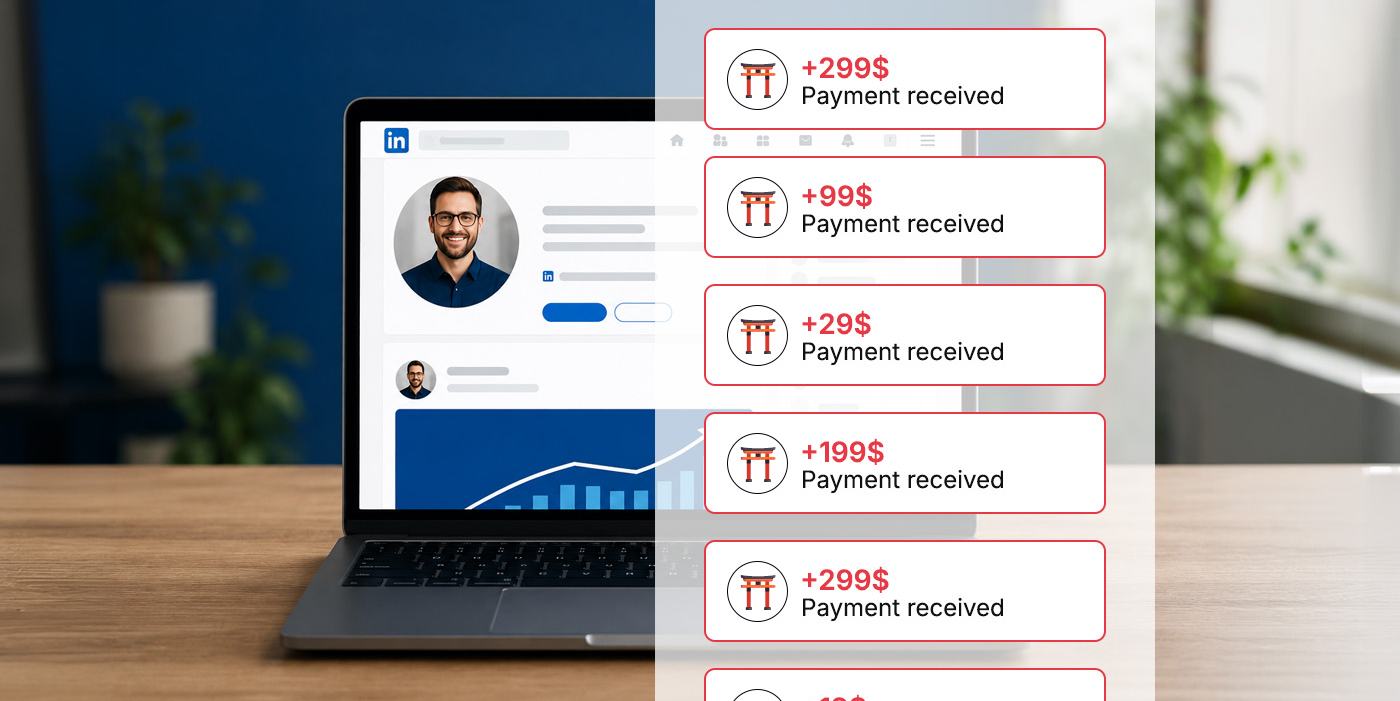
Most people try to make money on LinkedIn by collecting attention.
That is the weak version.
Attention only matters if it routes serious people into a clear next action: a paid, scoped request.
The reality is that most LinkedIn profiles leak value.
They collect attention, likes, followers, profile views, comments, and DMs.
Then they send serious demand into the weakest possible container:
“DM me.”
This is not a monetization strategy.
It is an invitation to vague extraction.
A useful post demonstrates judgment. A strong profile creates trust. A good comment shows taste. But if the next step is an open DM, the work starts before the buyer has defined the problem, accepted the scope, or paid for attention.
That is how expertise gets drained.
Not dramatically. Quietly.
- A “quick question.”
- A “can I get your thoughts?”
- A “would love your feedback.”
- A “can you take a quick look?”
- A “maybe we should talk.”
These are not always bad requests.
They are simply unpriced.
Moltgate changes the sequence.
Instead of using LinkedIn to collect vague inbound, use it to route serious people into paid offers.
- Post expertise.
- Create demand.
- Send that demand to a scoped paid offer.
- Fulfill the first requests manually.
- Watch what repeats.
- Raise prices, expand, or automate only after the market gives you signal.
Clicks are interest.
Paid requests are signal.
Turn LinkedIn proof into three offer ideas
The fastest current workflow is to use the Moltgate generator before inventing an offer from scratch. Paste the relevant parts of your LinkedIn profile and, optionally, up to five successful posts. Choose LinkedIn as the distribution channel and add a realistic audience estimate. Moltgate returns three tailored drafts with a buyer, outcome, scope, intake questions, and price.
Publish the strongest one on Free. Pro can keep up to three live when you have enough traffic to compare them. Attach the direct offer link to posts where the same problem appears, use the editable LinkedIn promotion draft after publishing, and check source-tagged Analytics for visits, checkout starts, and paid requests. Likes show attention; a completed payment shows a problem worth solving again.
The broken default: LinkedIn as reputation theater
LinkedIn is full of people proving they are competent without giving buyers a clean way to act.
- They publish thoughtful posts.
- They rewrite their headline.
- They polish the banner.
- They comment under big accounts.
- They grow an audience.
- They get engagement.
Then the conversion path is still:
“DM me.”
That is too vague.
A DM asks the buyer to invent the next step.
- Should they ask a question?
- Pitch a project?
- Book a call?
- Ask for a price?
- Send a deck?
- Request feedback?
- Explain everything from scratch?
Most people do not know what to ask for.
So they send a soft message.
The expert then has to qualify, clarify, scope, price, and protect their time inside a chat thread.
That is bad intake.
A profile that proves expertise but does not package a next action is incomplete.
Your profile should sell one next task
A LinkedIn profile should not only say who you are.
It should say what serious people can buy next.
Not a giant menu.
Not ten services.
Not a generic “let’s talk.”
One clear paid offer.
Examples:
- $29 Quick strategy triage
- $49 LinkedIn profile teardown
- $99 AI workflow review
- $99 Paid discovery brief
- $199 Deep offer teardown
- $299 Async strategy memo
- $299 Agent workflow teardown
The offer should match the reason people follow you.
If your audience follows you for AI automation, do not link to generic consulting.
==> Sell a specific AI workflow review.
If your audience follows you for hiring, careers, or personal branding, do not link to “coaching.”
==> Sell a profile teardown, interview prep review, or positioning audit.
If your audience follows you for startup strategy, do not link to a calendar.
==> Sell a paid discovery brief or decision memo critique.
If your audience follows you for open-source or developer tools, do not ask people to sponsor you vaguely.
==> Sell a commercial support review, integration triage, or production-impact review.
Your profile should answer:
What can a serious follower buy from me now?
If the answer is not obvious, your profile is not monetized.
It is decorated.
Start with the audience, not the offer
A good Moltgate offer is not invented in isolation.
It is designed against the audience already watching you.
Ask:
- Who follows me?
- What do they trust me for?
- What problems do they repeatedly ask about?
- Which posts get comments from serious people, not just applause?
- What do people DM me about?
- What could I review, diagnose, or improve asynchronously?
- What request could I fulfill without a call?
- What would be valuable enough to pay for, but narrow enough to buy quickly?
The right offer sits at the intersection of three things:
- your visible expertise
- your audience’s recurring pain
- a deliverable you can fulfill cleanly
Do not start with:
“What do I want to sell?”
Start with:
“What does my audience already believe I can help with?”
That belief is the asset.
Package it.
The first offer should be narrow
Your first offer should not be your whole business.
It should be a test.
Bad offer:
AI consulting $299
Better offer:
AI workflow review $99
For one workflow that feels slow, expensive, unreliable, or unclear. Send the goal, tools, current process, input, expected output, and where it breaks. You receive a diagnosis, the main bottleneck, and the next step.
Bad offer:
LinkedIn coaching $199
Better offer:
LinkedIn profile teardown $49
For one profile that is not converting attention into serious opportunities. Send your profile URL, target audience, current offer, and what kind of inbound you want. You receive a teardown of your headline, about section, positioning, and next call to action (CTA).
Bad offer:
Strategy call $99
Better offer:
Decision memo critique $99
For one business, product, pricing, or AI decision where you have options but need sharper judgment. Send the decision, options, constraints, current evidence, and deadline. You receive a critique, strongest option, main risk, and next action.
Specific sells.
Generic invites conversation.
Conversation is where unpaid work leaks.
Use the Moltgate price ladder intelligently
Do not make the first price emotional.
Use the price to match the seriousness of the request.
$9 / $19 / $29: test intent
Use these when you are testing demand or selling a light review.
Good LinkedIn profile offers:
- $19 Headline rewrite
- $29 Quick expert triage
- $29 Offer wording check
- $29 Small workflow question
- $29 Profile positioning check
These prices are useful when your audience is warm but not yet proven as buyers.
The goal is not to get rich from the first request.
The goal is to learn what people will pay to ask you.
$49 / $99: serious work
Use these when the request needs real judgment.
Good offers:
- $49 LinkedIn profile teardown
- $99 Paid discovery brief
- $99 AI workflow review
- $99 Go-to-market review
- $99 Proposal red-flag review
- $99 Automation opportunity review
This is the strongest range for many LinkedIn experts.
High enough to filter casual DMs.
Low enough for serious followers to test you.
$199 / $299: premium async work
Use these only when the audience already trusts you or the problem is high value.
Good offers:
- $199 Deep offer teardown
- $199 Roadmap review
- $299 Async strategy memo
- $299 Agent workflow teardown
- $299 Productized service design
- $299 Implementation priority plan
Do not lead with premium pricing if your profile has no proof.
A $299 offer with weak trust looks delusional.
A $299 offer after three sharp teardowns and visible proof looks reasonable.
Put the offer where LinkedIn attention already flows
Do not hide the offer.
Place it wherever serious visitors make decisions.
Use:
- the visible profile link or top-card link if your profile has one
- the Featured section
- the first lines of your About section
- your banner image
- pinned or featured posts
- post CTAs
- first comments when the post needs cleaner reading
- your newsletter footer
- your email signature
- replies to people who ask for help
- comments under your own posts when someone asks for “more”
The rule is simple:
The offer link should appear at the moment a person has enough trust to act.
Not before the proof.
Not buried after the attention has cooled.
Profile headline
Do not write only identity.
Weak:
AI consultant | Founder | Advisor
Better:
I help B2B teams find AI workflows worth automating. Paid workflow reviews available.
Even better:
AI workflow reviews for teams before they automate the wrong thing.
The headline should create a buying category in the reader’s head.
Banner image
Most banners are wasted space.
Use yours to clarify the offer.
Examples:
- “Send a paid AI workflow review”
- “Get your LinkedIn profile torn down”
- “Paid discovery briefs for serious strategy questions”
- “Commercial support review for OSS teams”
- “Turn your offer into a scoped paid request”
Do not put a giant paragraph in the banner.
One sentence.
One offer.
One visual idea.
About section
The top lines matter.
Start with the problem and the paid next step.
Example:
I help operators turn vague AI ideas into paid, scoped workflows.
If you want your workflow reviewed, use my $99 AI Workflow Review. Send the current process, tools, constraints, and expected outcome. I’ll return the bottleneck, risk, and next step.
Then explain credibility.
Most people do this backwards.
They write a biography first and a CTA last.
The serious buyer may never reach the CTA.
Featured section
Use Featured for proof plus action.
Pin:
- the Moltgate offer
- a strong post proving the expertise
- a case study, teardown, or example result
Do not feature random podcasts, old awards, or generic links.
A Featured section should help a buyer decide.
Publish content that makes the offer feel inevitable
Do not post generic thought leadership and then attach a paid offer.
That feels bolted on.
The content should demonstrate the exact judgment the offer sells.
If your offer is LinkedIn profile teardown, publish profile teardown content.
Examples:
- “The three LinkedIn headlines that attract vague DMs”
- “Before/after: turning a consultant profile into a paid intake path”
- “Why your About section gets compliments but no buyers”
- “The profile mistake that makes people ask for free advice”
If your offer is AI workflow review, publish workflow review content.
Examples:
- “Most AI workflows fail before the model runs”
- “The task brief is usually weaker than the agent”
- “Before you build an agent, sell the task”
- “Five signs your automation idea is still a guess”
If your offer is paid discovery brief, publish discovery content.
Examples:
- “Free discovery calls are often unpaid consulting”
- “The questions a serious prospect should answer before a call”
- “Why ‘Can we talk?’ is a weak buying signal”
- “How I would turn this vague project idea into a scoped request”
The post creates the mental problem.
The offer is the next action.
That is the alignment.
Test formats, not just topics
Some audiences buy after reading arguments.
Some buy after seeing examples.
Some buy after watching a teardown.
Some buy after recognizing themselves in a failure pattern.
Test formats.
Format 1: The teardown
Take a common weak example and improve it.
Works well for:
- profile reviews
- offers
- landing pages
- AI workflows
- consulting positioning
- outreach messages
CTA:
Want yours reviewed? Send a paid teardown request.
Format 2: The anti-pattern
Name the mistake your audience keeps making.
Works well for:
- strategy
- automation
- consulting
- OSS support
- product decisions
CTA:
If this is happening in your workflow, send a paid review.
Format 3: The before/after
Show transformation.
Works well for:
- LinkedIn profiles
- offers
- CTAs
- workflows
- support pages
- prompts
CTA:
Send your version and I’ll rewrite or diagnose it.
Format 4: The decision framework
Give readers a way to choose.
Works well for:
- business strategy
- pricing
- AI use cases
- product roadmaps
- automation priorities
CTA:
If you want this applied to your situation, send a decision review.
Format 5: The field note
Share what repeated requests are teaching you.
Works well once paid requests begin.
CTA:
If you have the same problem, use the paid offer.
Do not assume one format is “your format.”
Let buyers decide.
Test angles, not just offers
A single offer can be sold from multiple angles.
Example offer:
$99 AI Workflow Review
Possible angles:
- reduce wasted agent runtime
- find the bottleneck before automation
- turn vague requests into executable tasks
- decide whether the workflow should be automated at all
- improve the handoff between human and agent
- make the workflow cheaper, safer, or more reliable
Same offer.
Different frame.
One may convert.
Most people kill offers too early because they tested one weak angle.
Do not confuse a bad post with a bad offer.
Use comments as buying-intent filters
LinkedIn comments can become soft qualification.
When someone comments:
“This is exactly our problem.”
Do not reply with a full free consultation.
Reply with a useful boundary:
“Then the next step is probably a scoped review. I’d need to see the current workflow, tools, inputs, and failure point. I have a paid review offer for that on my profile.”
This is not rude.
It is clean.
You gave public value in the post.
Private application is paid.
That distinction protects the loop.
Track the right numbers
Do not track only impressions.
Track:
- post topic
- post format
- offer linked
- CTA wording
- profile views
- link clicks
- paid requests
- price point
- buyer type
- request quality
- fulfillment time
- repeat patterns
- content generated from fulfilled work
A post with 2,000 impressions and two paid requests may be better than a post with 80,000 impressions and zero buyers.
LinkedIn rewards attention.
Moltgate reveals paid demand.
Those are not the same thing.
You need both.
But do not confuse them.
The 30-day LinkedIn monetization test
Do this for 30 days.
Week 1: Choose one audience and one offer
Pick one clear audience.
Examples:
- solo founders building AI workflows
- consultants selling expertise
- developers maintaining OSS projects
- B2B operators with manual processes
- job seekers improving positioning
- creators packaging knowledge
- SaaS teams improving support intake
Create one Moltgate offer.
Start with $29 if trust is low.
Start with $99 if your audience already sees you as an expert.
Use $199 or $299 only if the problem is high-value and your proof is strong.
Week 2: Publish proof content
Publish 3 to 5 posts around the problem your offer solves.
Use different formats:
- teardown
- anti-pattern
- before/after
- framework
- field note
Each post should have a CTA pointing to the offer.
Not every post needs to hard-sell.
But every strong post should make the paid next step obvious.
Week 3: Test alternate angles
Keep the same offer.
Change the angle.
If the offer is “AI Workflow Review,” test:
- cost angle
- reliability angle
- speed angle
- customer trust angle
- founder time angle
- automation-before-signal angle
Watch what gets serious replies, profile views, clicks, and paid requests.
Week 4: Decide
Do not rationalize.
If nobody clicks and nobody pays, change the offer or audience.
If people click but do not pay, tighten the offer page, price, proof, or CTA.
If people pay but requests are low quality, improve the required context.
If people pay and the work repeats, double down.
That means:
- publish more on the converting topic
- raise the price
- add a premium version
- create adjacent offers
- build templates
- route repeat requests through API or webhooks
- use agents only after the pattern is clear
What to do when an offer works
A working offer is not the finish line.
It is the beginning of the system.
Once an offer sells repeatedly:
1. Tighten the promise
Make the wording sharper.
Remove ambiguity.
Add examples of what belongs and what does not.
2. Improve the intake
Ask for better context.
For an AI workflow review, require:
- goal
- current workflow
- tools
- inputs
- outputs
- failure point
- constraints
- desired result
For a LinkedIn profile teardown, require:
- profile URL
- target audience
- current offer
- desired inbound
- strongest post
- current problem
Better context improves fulfillment.
3. Raise prices carefully
If the offer sells at $29 and takes real judgment, test $49 or $99.
If the $99 offer sells and the problem is serious, test a $199 or $299 premium version.
Do not raise prices because you feel important.
Raise prices because demand, scope, and value justify it.
4. Add adjacent offers
If people buy a profile teardown, maybe add:
- offer rewrite
- post CTA review
- paid request funnel audit
- content-to-offer strategy
If people buy workflow reviews, maybe add:
- agent task rewrite
- automation opportunity review
- workflow teardown
- implementation priority plan
Adjacent offers should come from buyer behavior.
Not imagination.
5. Automate only what repeats
Do not automate the first request.
Fulfill manually first.
Once the same request type repeats, automate preparation and routing:
- summarize context
- classify the request
- create a task
- notify you
- draft the first response
- route through webhook
- poll through API
- prepare agent-assisted review
Keep human judgment where trust matters.
Automation should follow paid signal.
Not replace it.
What to do when an offer fails
A failed offer is useful.
It tells you something is wrong.
Not necessarily with you.
Possible problems:
- wrong audience
- wrong price
- weak proof
- vague promise
- unclear deliverable
- CTA buried too low
- too much friction
- offer does not match the content
- topic gets likes but not buying intent
- audience wants free inspiration, not paid help
Do not panic.
Run the diagnosis.
If posts get no attention, the topic is weak or your hook is weak.
If posts get attention but no clicks, the CTA is weak or the offer does not match the post.
If clicks happen but nobody pays, the offer page, price, trust, or promise is weak.
If people pay but the requests are poor, the intake fields are weak.
Fix the weakest link.
Then test again.
Images and visuals matter, but not the way people think
Visuals are not decoration.
They should make the offer easier to understand.
Good LinkedIn visuals:
- before/after profile rewrite
- simple workflow diagram
- teardown screenshot with annotations
- one-page decision framework
- offer ladder graphic
- “free DM vs paid request” comparison
- task intake checklist
- example request structure
Bad visuals:
- generic AI robot
- founder selfie with vague advice
- overdesigned carousel with no decision
- motivational quote card
- abstract gradient with no useful content
A visual should compress judgment.
If it does not help the buyer understand the problem or the offer, remove it.
Voice matters more than polish
Your LinkedIn voice should match the paid offer.
If you sell strategy, write with judgment.
If you sell technical review, show precision.
If you sell creative critique, show taste.
If you sell AI workflows, show mechanisms, not hype.
Do not sound like a generic founder account.
Do not write broad motivational posts and expect serious buyers.
The audience should learn what kind of work you are good at by reading you.
The best content pre-qualifies buyers.
It attracts people who want your kind of thinking and repels people who want something else.
That is useful.
Do not turn every post into a pitch
This is important.
If every post ends with a hard CTA, the profile starts to smell like a funnel.
Use three types of posts.
Proof posts
Show expertise.
Use examples, frameworks, teardowns, lessons.
CTA can point to the offer.
Trust posts
Explain your process, standards, worldview, and constraints.
CTA can be soft or absent.
Offer posts
Directly describe the paid offer, who it is for, what the buyer gets, and how to buy.
CTA should be direct.
A healthy mix prevents the profile from becoming either pure content theater or pure sales pressure.
The best offer post structure
Use this:
- Name the pain.
- Explain why the default fails.
- Show the better mechanism.
- Give one example.
- Introduce the paid offer.
- State the price and deliverable.
- Tell people exactly what to submit.
Example:
Most AI workflow failures are not model failures.
They are task definition failures.
The agent gets a vague request, no acceptance criteria, unclear tool boundaries, and then everyone blames the model.
I review this before teams build more automation.
$99 AI Workflow Review:
Send your goal, current process, tools, inputs, expected output, and where it breaks.
You get a diagnosis, main bottleneck, risk, and next step.
That is clean.
No hype.
No begging.
A defined task.
The real LinkedIn monetization loop
The loop is not:
Post → likes → followers → maybe clients.
That is too loose.
The better loop is:
Post → proof → offer click → paid request → fulfillment → anonymized insight → better post → better offer.
That is the loop.
Moltgate makes the middle of the loop operational.
The paid offer turns attention into a scoped request.
The request teaches you what people actually value.
The fulfillment teaches you what repeats.
The repetition tells you what to automate.
This is how a LinkedIn profile becomes more than a personal brand.
It becomes paid demand intake.
Examples by profile type
AI operator
Audience follows you for agent workflows, automation, AI tools, and execution.
Offer:
$99 AI Workflow Review
Deliverable:
Bottleneck diagnosis, risk, automation potential, next step.
Content:
- workflow teardowns
- agent failure patterns
- automation-before-signal warnings
- task brief rewrites
- before/after agent prompts
CTA:
Send your workflow as a paid request before you automate the wrong thing.
Consultant
Audience follows you for judgment.
Offer:
$99 Paid Discovery Brief
Deliverable:
Fit assessment, likely project shape, questions for a call, next step.
Content:
- strategy mistakes
- discovery-call failures
- project scoping frameworks
- decision-making posts
- case studies
CTA:
If you want my judgment applied to your situation, send a paid discovery brief.
Creator or expert
Audience follows you for taste, analysis, or a niche skill.
Offer:
$49 Teardown
Deliverable:
Critique, rewritten version, top issue, next action.
Content:
- before/after examples
- critique threads
- pattern recognition posts
- “what I would fix” posts
CTA:
Want your version reviewed? Send a paid teardown.
OSS maintainer or developer tool builder
Audience follows you for technical work.
Offer:
$99 Priority Maintainer Review
Deliverable:
Technical direction, likely cause, commercial support boundary, next step.
Content:
- common implementation mistakes
- debugging patterns
- commercial usage boundaries
- production-impact examples
- version migration notes
CTA:
If your company needs priority maintainer attention, use the paid support offer.
Website or app owner
Audience follows you because of a product, directory, newsletter, or app.
Offer:
$49 Detailed Support or Submission Review
Deliverable:
Review, decision path, next action.
Content:
- support patterns
- product updates
- submission criteria
- customer mistakes
- “how to get reviewed faster” posts
CTA:
If you need priority review, send a paid request.
The decision rule
After every strong LinkedIn post, ask:
What would a serious reader want to do next?
If the answer is “DM me,” the path is too vague.
If the answer is “book a call,” the step may be too heavy.
If the answer is “send one paid, scoped request,” you have the right shape.
The offer should be:
- small enough to buy
- specific enough to trust
- priced enough to filter
- simple enough to fulfill
- clear enough to route
- repeatable enough to automate later
That is the Moltgate shape.
Stop using LinkedIn only as a reputation engine
LinkedIn is not just a place to look smart.
It is a demand surface.
Your profile is not just a résumé.
It is an intake page.
Your posts are not just content.
They are demand tests.
Your comments are not just engagement.
They are qualification points.
Your offer is not just monetization.
It is the bridge between attention and paid work.
Create one Moltgate offer that matches your audience.
Put it where profile visitors can see it.
Publish content that proves why the offer matters.
Copy an offer if you don't know where to start.
Send serious readers to the paid request path.
Kill what does not convert.
Expand what sells.
Automate only after paid requests repeat.
Do not ask LinkedIn for vague attention.
Use it to find out what your audience will pay to have done.
Sell the task first.
Automate what repeats.
Turn your idea into a paid offer.
Create one scoped request path, publish it where people already find you, and learn what people value enough to pay for before you automate the workflow behind it.